
Balayage vs Ombre: The Ultimate Guide to Choosing Your Perfect Hair Color Technique
In the ever-evolving world of hair color, two techniques reign supreme: balayage and ombre. Whether you’re scrolling through Instagram reels of sun-kissed waves or dreaming of a bold, gradient transformation, these French-inspired methods have become salon staples worldwide. But here’s the thing—many people use the terms interchangeably, leading to disappointment when the result doesn’t match the vision.
Balayage delivers a natural, lived-in glow, while ombre creates a dramatic, head-turning fade. Understanding the differences can save you time, money, and regret at the salon. This comprehensive 1,500-word guide breaks it all down with expert insights, real-world examples, pros/cons, maintenance tips, and stunning visuals. By the end, you’ll know exactly which technique suits your hair type, lifestyle, and vibe in 2026
Table of Contents
- What Is Balayage? The Art of Hand-Painted Highlights
- What Is Ombre? The Gradient Color Revolution
- Key Technical Differences: How the Processes Compare
- Visual Differences: From Subtle Sun-Kissed to Bold Drama
- Suitability: Matching Techniques to Hair Types, Lengths, and Skin Tones
- Maintenance and Longevity: Which One Grows Out Gracefully?
- Cost Breakdown: What to Budget for in 2026
- Pros, Cons, and Final Verdict: Making the Right Choice
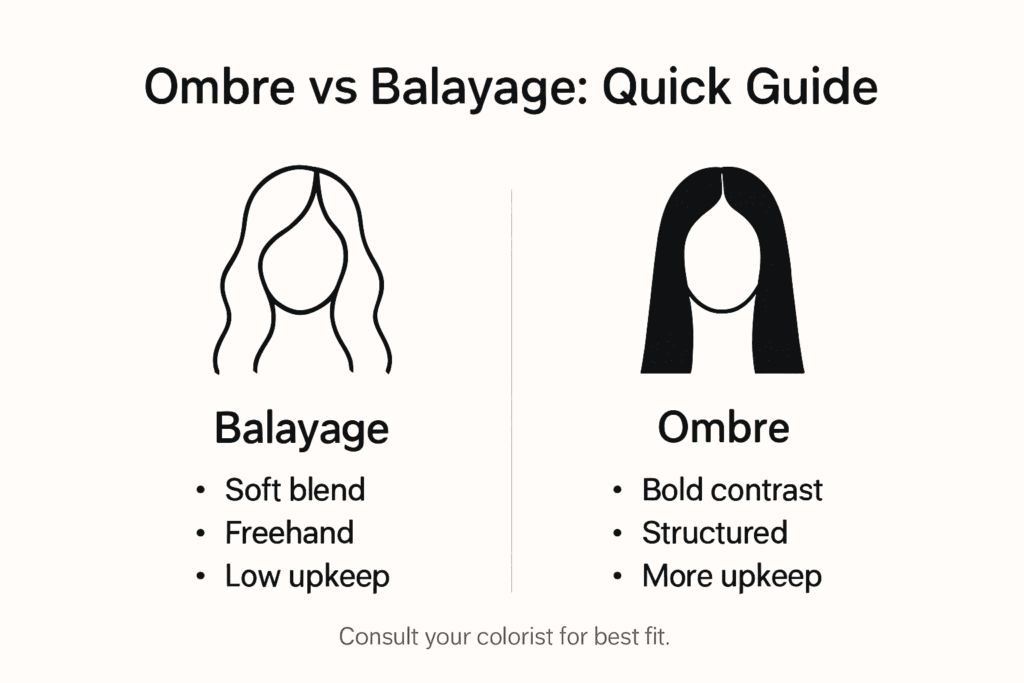
Table What Is Balayage? The Art of Hand-Painted Highlights
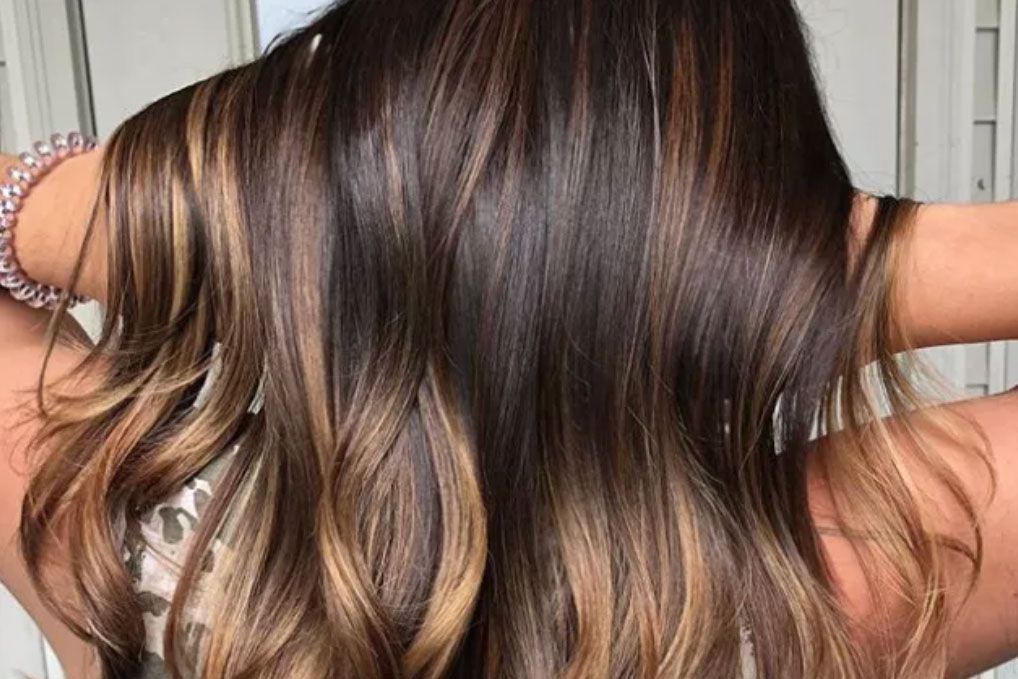
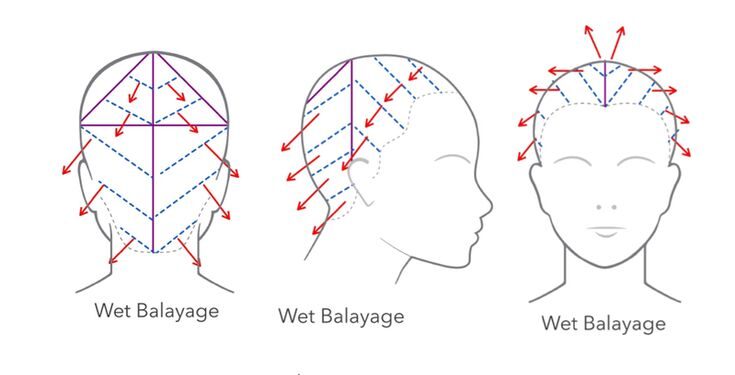
Balayage, pronounced “bah-lee-ahj,” comes from the French word meaning “to sweep.” This freehand technique involves a colorist painting lighter shades directly onto sections of hair using a brush, without foils. The result? Soft, natural-looking highlights that mimic how the sun naturally lightens hair over time.
Unlike traditional foils that create uniform streaks, balayage focuses on placement: heavier toward the ends and mid-lengths, with finer pieces near the face for dimension. It’s highly customizable—think caramel ribbons on brunette hair or icy tones on blondes.
In 2026, balayage has evolved with “money piece” accents (bright face-framing pieces) and “lived-in” blends using toners for multi-dimensional results. It’s ideal for adding movement and volume without a stark root line. Celebrities like Zendaya and Blake Lively have popularized this effortless glow.
Pros for beginners: It works on all hair colors and textures, from straight to curly. The process takes 2-5 hours depending on hair length and desired lightness.
What Is Ombre? The Gradient Color Revolution
Ombre (ohm-bray), meaning “shade” in French, is a color style rather than a strict technique. It creates a seamless vertical gradient: darker at the roots, gradually lightening toward the tips. Think of it as a dip-dye but softer and more blended.
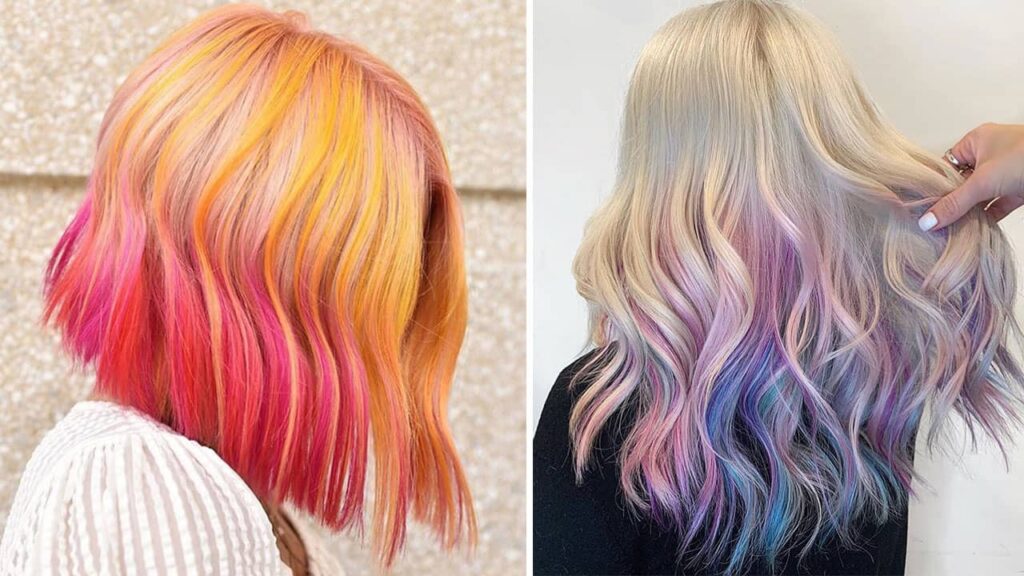
The classic ombre starts dark near the scalp (often the natural color) and fades to lighter ends—perfect for brunettes going blonde or bold color pops like pink-to-purple. Reverse ombre (light roots to dark ends) is trending in 2026 for edgier looks.
Application often involves sectioning hair horizontally and using foils or freehand for the transition zone. It’s bolder than balayage, with a clear “line” where the color shifts, though modern versions use soft blending for subtlety.
Ombre exploded in popularity in the 2010s and remains a favorite for short bobs or long layers. It’s versatile for vibrant hues—imagine emerald green fading into teal—but requires careful lightening to avoid brassiness.
Unlike traditional foils that create uniform streaks, balayage focuses on placement: heavier toward the ends and mid-lengths, with finer pieces near the face for dimension. It’s highly customizable—think caramel ribbons on brunette hair or icy tones on blondes.
In 2026, balayage has evolved with “money piece” accents (bright face-framing pieces) and “lived-in” blends using toners for multi-dimensional results. It’s ideal for adding movement and volume without a stark root line. Celebrities like Zendaya and Blake Lively have popularized this effortless glow.
Pros for beginners: It works on all hair colors and textures, from straight to curly. The process takes 2-5 hours depending on hair length and desired lightness.
Key Technical Differences: How the Processes Compare
Here’s where the magic (and confusion) happens. Balayage is a technique (how color is applied), while ombre is a style (the overall effect).
- Application: Balayage is 100% freehand—sweeping motions for irregular, natural placement. Ombre uses more structured methods like horizontal sections, foils for even saturation, or backcombing for softness.
- Placement: Balayage avoids the roots entirely for seamless grow-out. Ombre leaves roots dark but focuses the gradient from mid-shaft down.
- Tools: Brushes and gloves for balayage; sometimes foils and combs for ombre precision.
- Processing: Both use lighteners and toners, but balayage often needs multiple sessions for lift on dark hair. Ombre can be more aggressive on ends.
In practice, stylists combine them—balayage for a soft ombre effect, or “sombre” (soft ombre) for subtler gradients
Visual Differences: From Subtle Sun-Kissed to Bold Drama
Stand in front of a mirror post-color, and you’ll see it immediately:
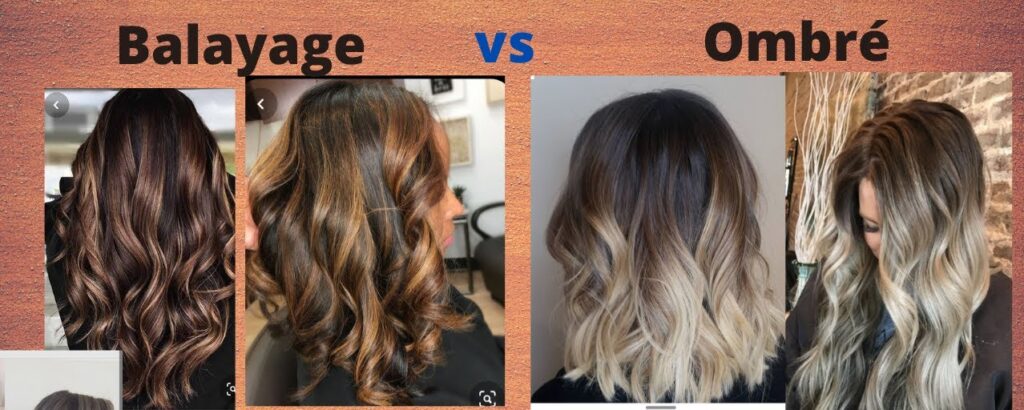
- Balayage: Dimensional, blended highlights. No harsh lines—hair looks like it spent summer at the beach. Great for texture and shine; adds “expensive” movement to waves.
- Ombre: Striking two-tone effect. The transition is the star—dramatic from root to tip. It elongates the face and works wonders on straight hair for sleek vibes.
Side-by-side: Balayage feels organic and low-key; ombre screams “statement.” In photos, balayage catches light naturally; ombre pops with contrast.
Suitability: Matching Techniques to Hair Types, Lengths, and Skin Tones
Not every technique flatters everyone.
- Hair Types: Balayage shines on thick, wavy, or curly hair (enhances natural texture). Ombre suits fine or straight hair for added depth. Both work on damaged hair if pre-treated.
- Lengths: Balayage is versatile for any length but excels on shoulder-grazing or longer styles. Ombre needs at least mid-length to show the gradient—short pixies? Skip it.
- Skin Tones: Warm tones (olive, golden) pair with honey balayage. Cool undertones love ash ombre. Darker skin? Both pop with caramel or champagne shades.
In India (where balayage is booming in Mumbai and Delhi salons), humidity favors low-maintenance balayage on monsoon-prone hair.
Maintenance and Longevity: Which One Grows Out Gracefully?
Both are low-maintenance compared to full color, but:
- Balayage: Grows out beautifully—highlights soften over time. Touch-ups every 3-6 months. Use purple shampoo to fight brass.
- Ombre: Roots stay dark, so grow-out is forgiving at the top, but ends may need refreshing every 8-12 weeks to combat fading.
Aftercare: Color-safe shampoo, weekly masks, heat protectant. In 2026, bond-building treatments like Olaplex keep both vibrant longer
Cost Breakdown: What to Budget for in 2026
Expect to pay for artistry:
- Balayage: ₹8,000–₹25,000 (India) or $150–$450 (global). Higher for long/thick hair due to time (3-5 hours).
- Ombre: ₹7,000–₹22,000 or $120–$400. Slightly less if no full lift needed.
Factors: Stylist expertise, hair condition, add-ons (toner, gloss). Balayage often costs more upfront but saves long-term.
Pro tip: Book a consultation—many salons offer virtual previews
Pros, Cons, and Final Verdict: Making the Right Choice
Balayage Pros: Natural, low-maintenance, versatile, adds volume. Cons: Can be pricier initially, less “wow” for bold lovers.
Ombre Pros: Dramatic transformation, easy root touch-ups, great for color experiments. Cons: More upkeep on ends, potential for harsh lines if not blended well.
Verdict: Choose balayage for everyday elegance and minimal effort (80% of clients in 2026). Go ombre for runway-ready impact. Hybrid “balayage ombre” is the sweet spot for many.
Ultimately, consult a trusted colorist. Your hair will thank you.